Designing the Deck
Designing complete deck of playing cards using Figma and Variables
Inspiration
Reimagining a timeless classic with a touch of minimalism...
I love playing cards, they are a perfect sandbox for creating a variety of fun gaming experiences. Playing cards have existed for centuries, with their designs evolving into intricate, often elaborate styles. For this project, I wanted to strip it all down to essentials—minimal shapes, clean lines, and universal readability—while maintaining the usability and recognizability that make playing cards so iconic.
This project was also an opportunity to explore new design techniques and tools, especially Figma’s Variables, which allowed me to experiment with customization at scale.
Inspired by my love for clean, functional design, I set out to create a minimalist deck of cards that reimagines traditional playing card aesthetics while maintaining usability.
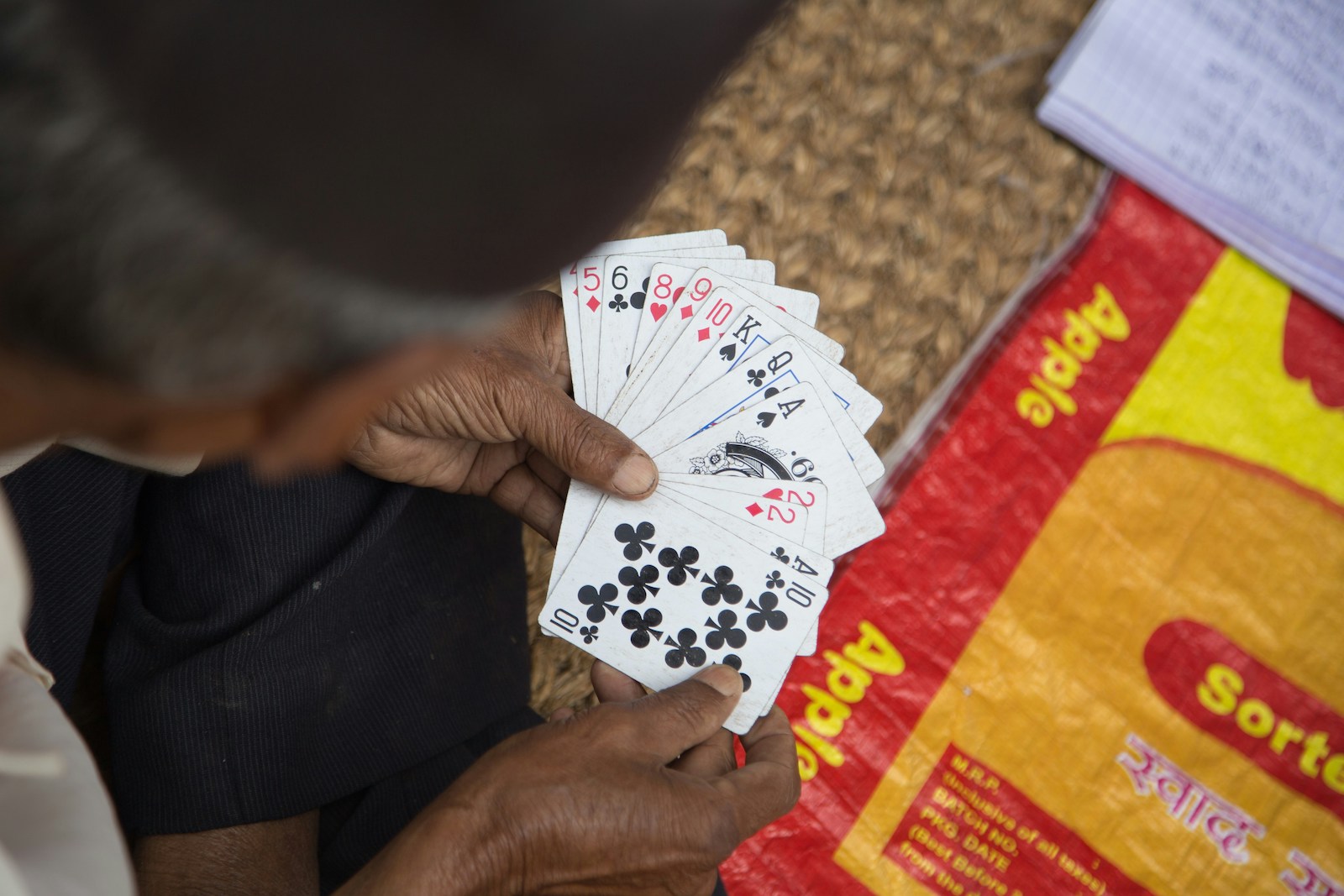
Photo by Miroslav Jonas on Unsplash
Goals and Challenges
Goals
Create a visually appealing minimalist design that respects traditional card structure
Ensure clarity and usability for players of all ages and skill levels
Incorporate a dynamic customization feature to enable visual personalization
Challenges
Balancing minimalism with functionality: ensuring players can easily distinguish between suits, ranks, and face cards
Crafting a cohesive system where every card element feels part of a unified design language
Design Process
Research and Ideation
Before starting, I studied the structure and layout of traditional playing cards to understand what elements are essential for gameplay.
The focus was on:
Suit symbols and their placement
Differentiation of face cards through design hierarchies
Aesthetic consistency across the deck
I also took inspiration from other artists on Dribbble to get the creative juices going:
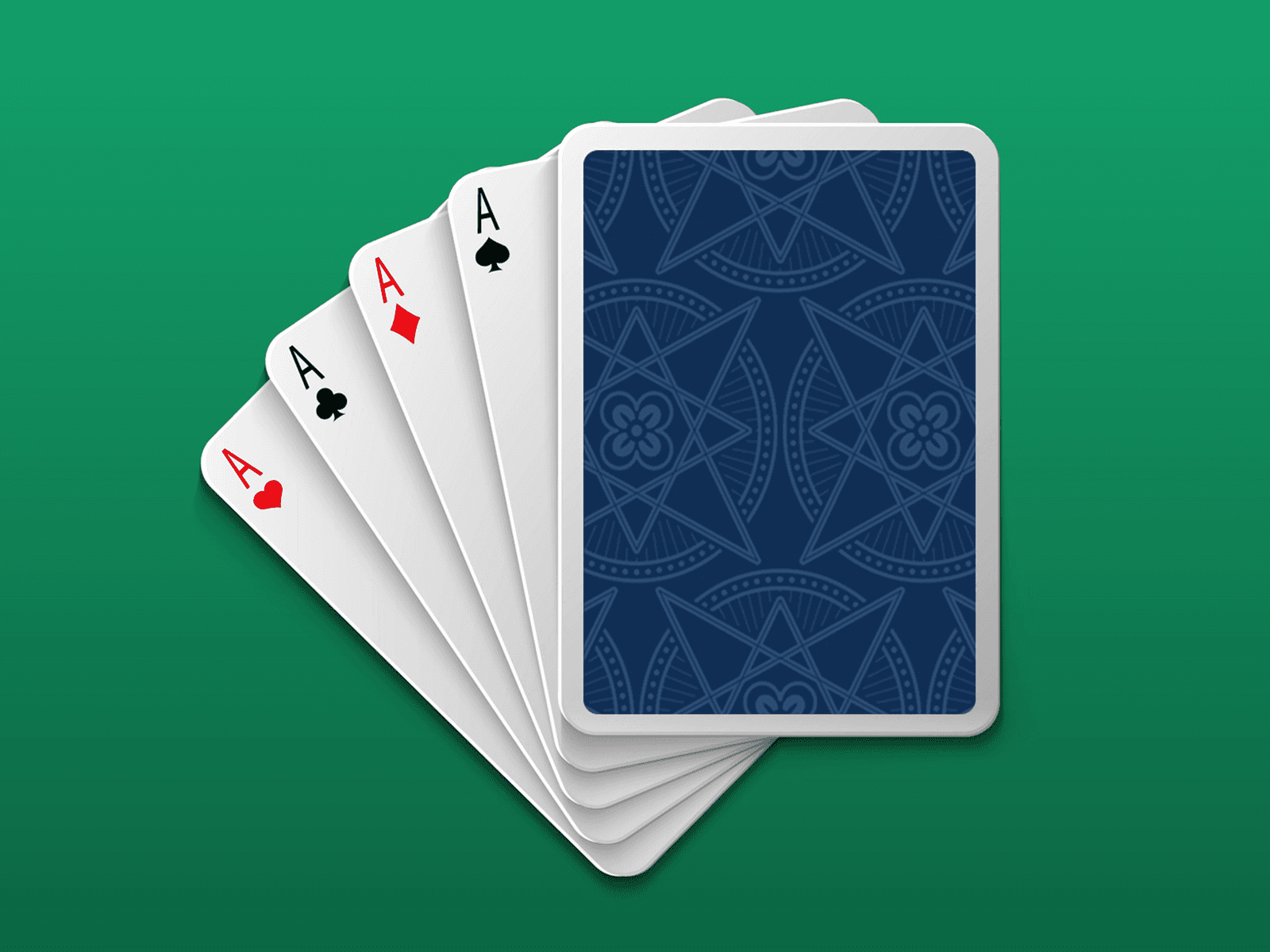
Image by Peachline
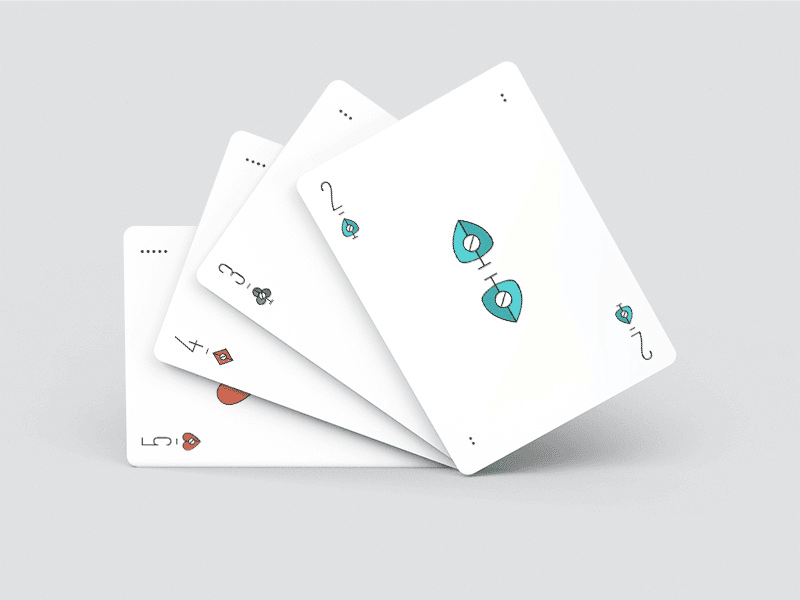
Image by Tony D’Amico

Image by Michael B. Myers Jr.

Image by DKNG
Design Highlights
Using Figma, I adopted a rapid iterative approach:
Shapes and Symbols: Designed custom minimalist shapes for hearts, spades, diamonds, and clubs yet maintaining distinction and recognition.
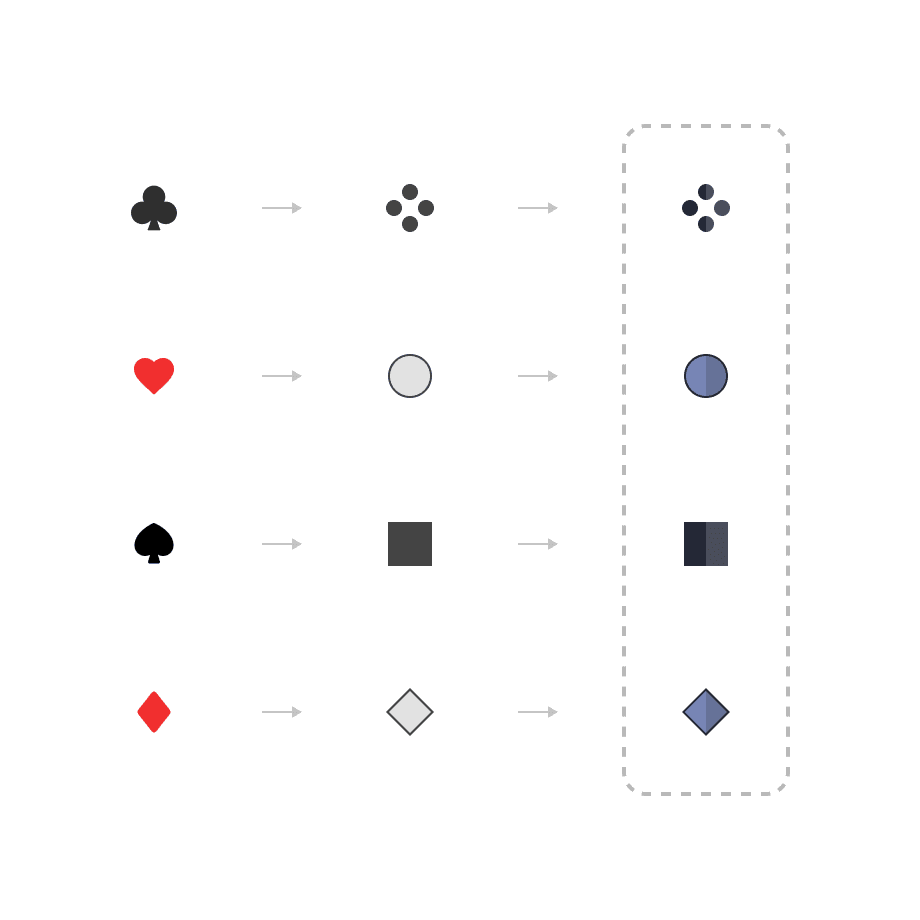
How I mapped traditional symbols to simple geometric shapes
Face Cards: Reimagined Kings, Queens, and Jacks with simple, abstract patterns while keeping them distinct and identifiable.
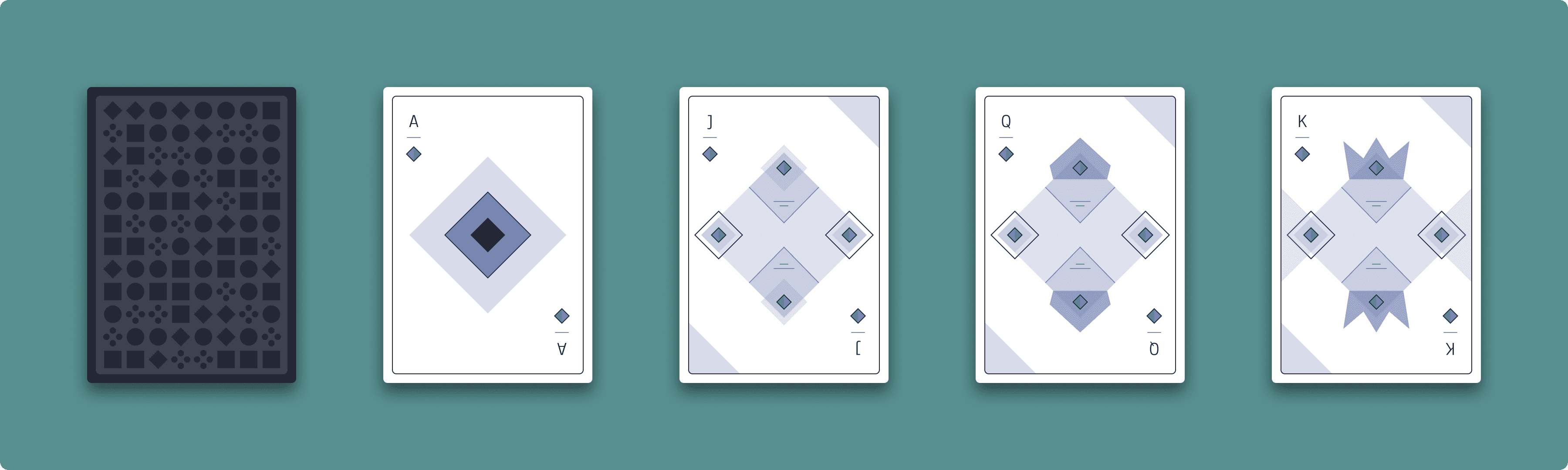
Ace and other face cards for the Diamond Suite
Color Palette Methodology: Opted for a flexible color system to allow customization while maintaining visual balance. The trick was to use a “dark and light” mask for the same accent color.
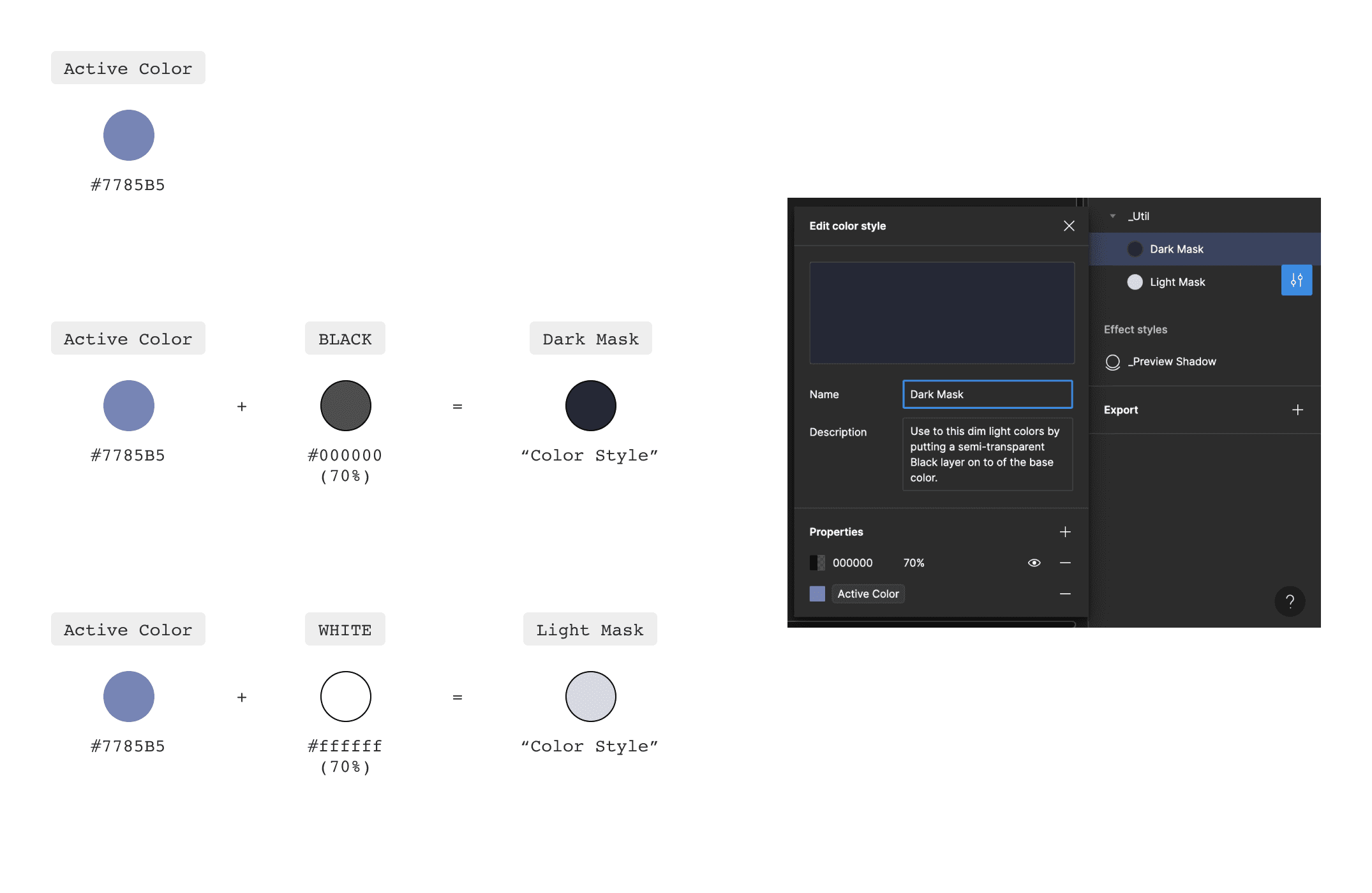
A flexible color palette using just one color with dark and light masks, made possible by Figma
Innovative Customization with Variables
One of the standout features of this project is the use of Figma’s Variables to introduce a dynamic customization capability:
By changing a single "main color" variable, the entire deck adapts its appearance—including suits, face cards, and the card back
This was achieved using dark and light masking techniques to ensure harmonious transitions across different design elements
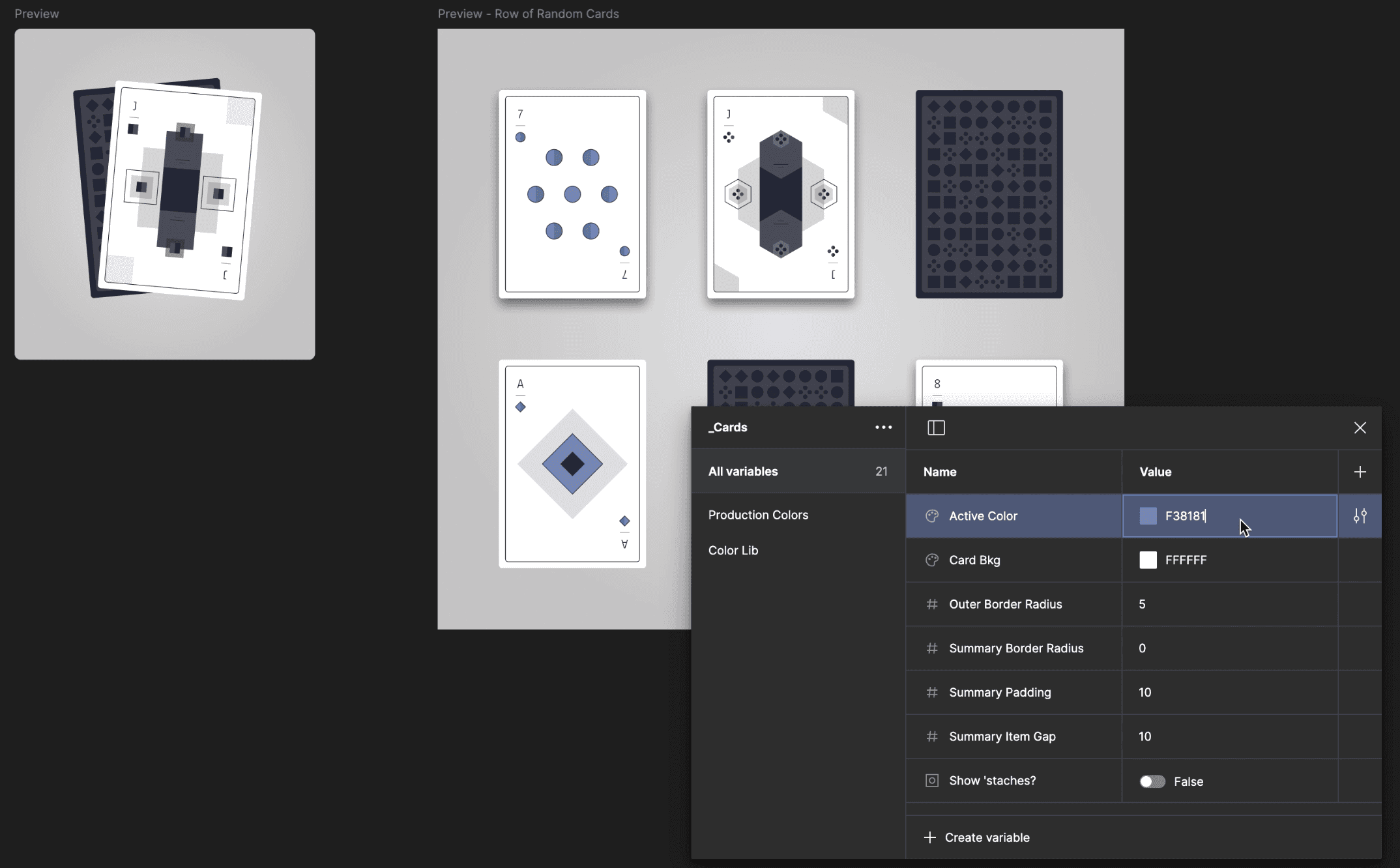
Demonstration of how changing one variable changes the color scheme of entire deck
The Final Product
"A deck of cards, simple yet striking."
The final deck features:
Minimalist suit icons that are instantly recognizable
Elegant, abstract face card designs with a cohesive aesthetic
A customizable color palette enabled by Figma’s Variables, allowing endless personalization
Key features at a glance:
Aces: Distinctive designs that act as centerpiece cards.
Jokers: Playful yet minimalist, designed to complement the deck.
Card Back: A clean, symmetrical design with subtle patterns.
Variety: With color adjustments using Variables, I could create multiple decks.
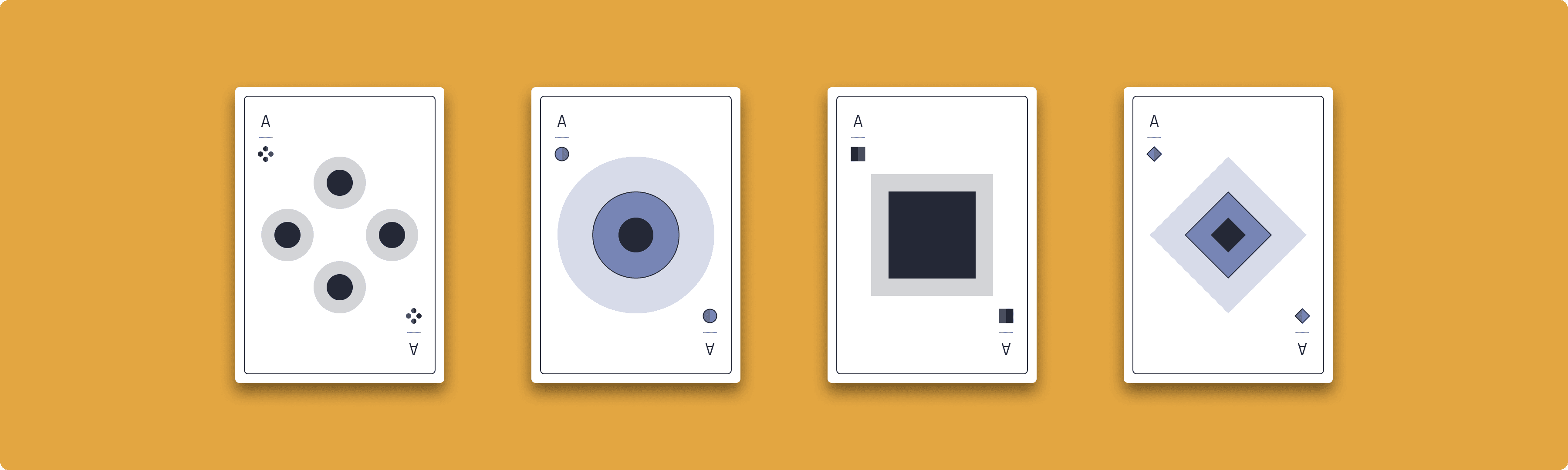
Aces of each suite
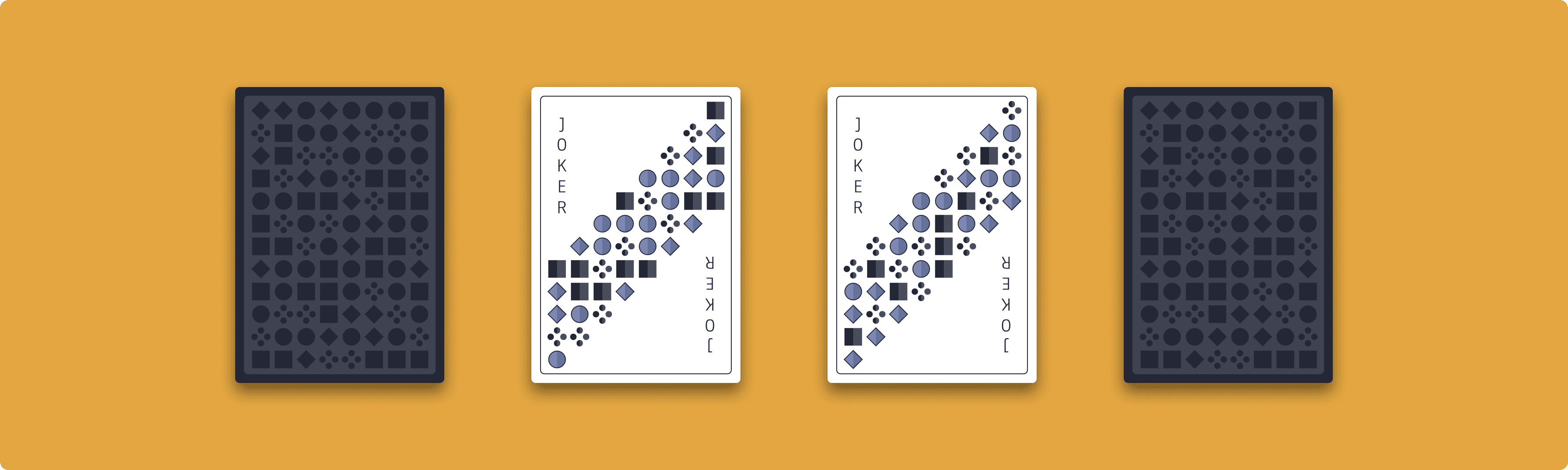
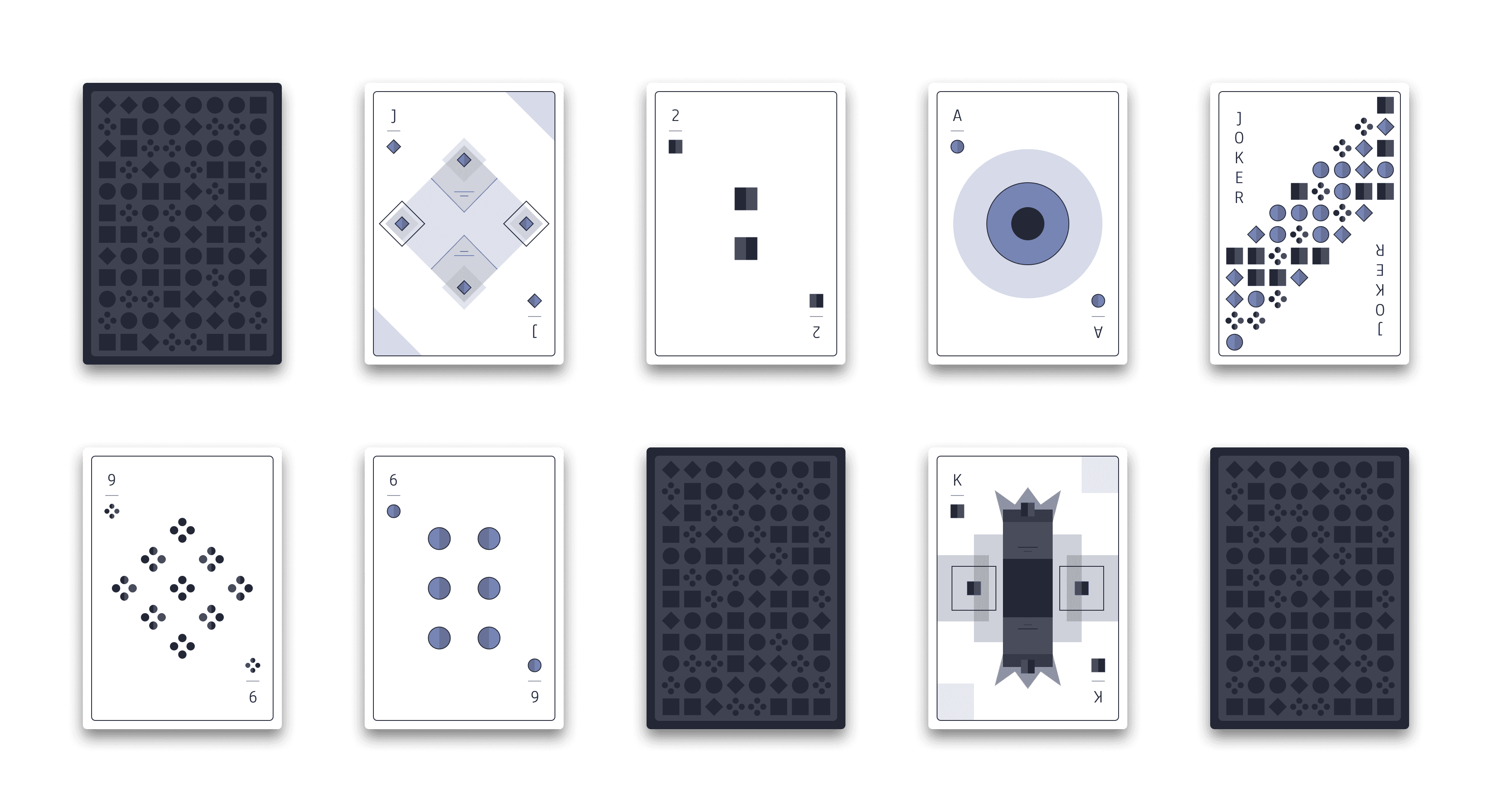
Joker cards are designed using the four shapes scattered randomly; same for the back side of the deck
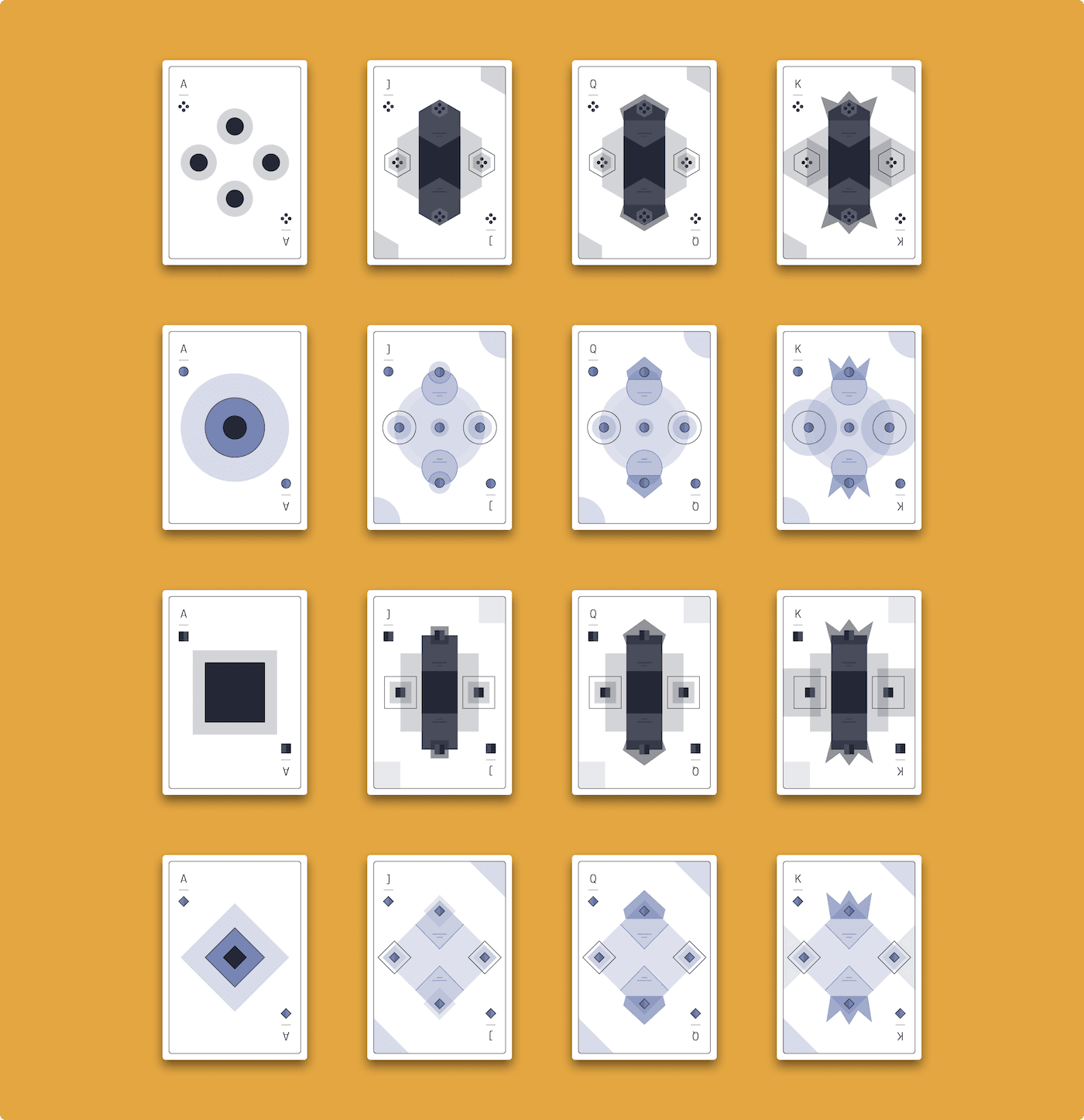
Aces and face cards of each suite; heavy emphasis on reusing shapes and symmetry
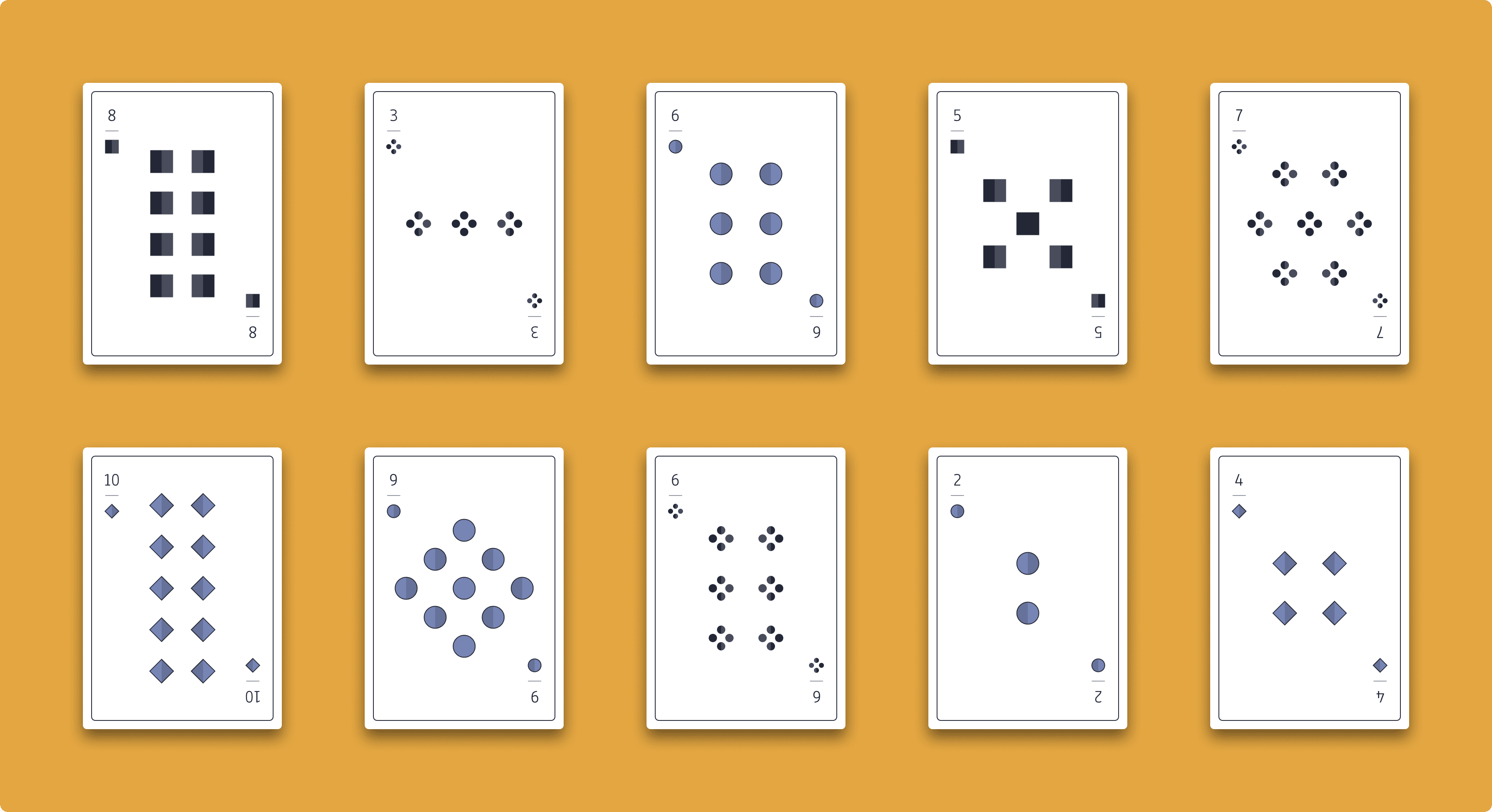
Other cards in the deck
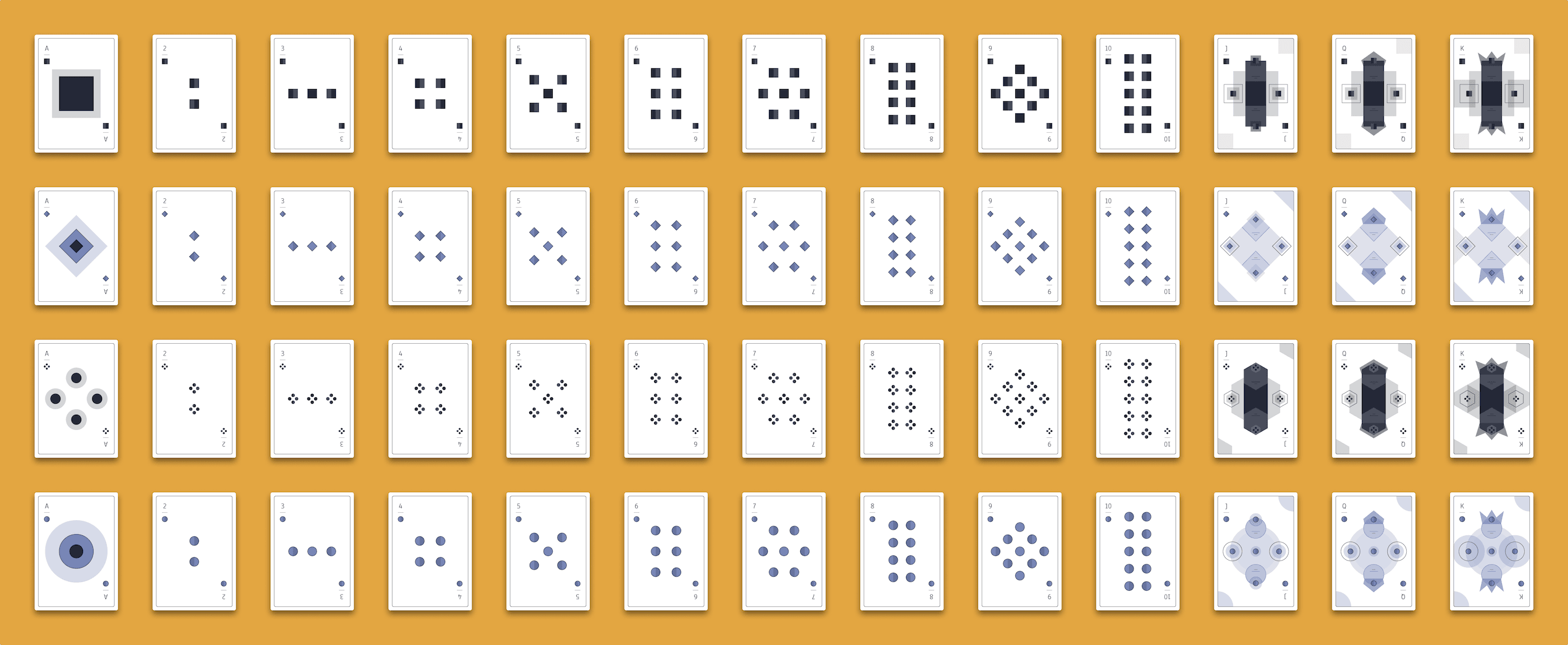
Entire deck!
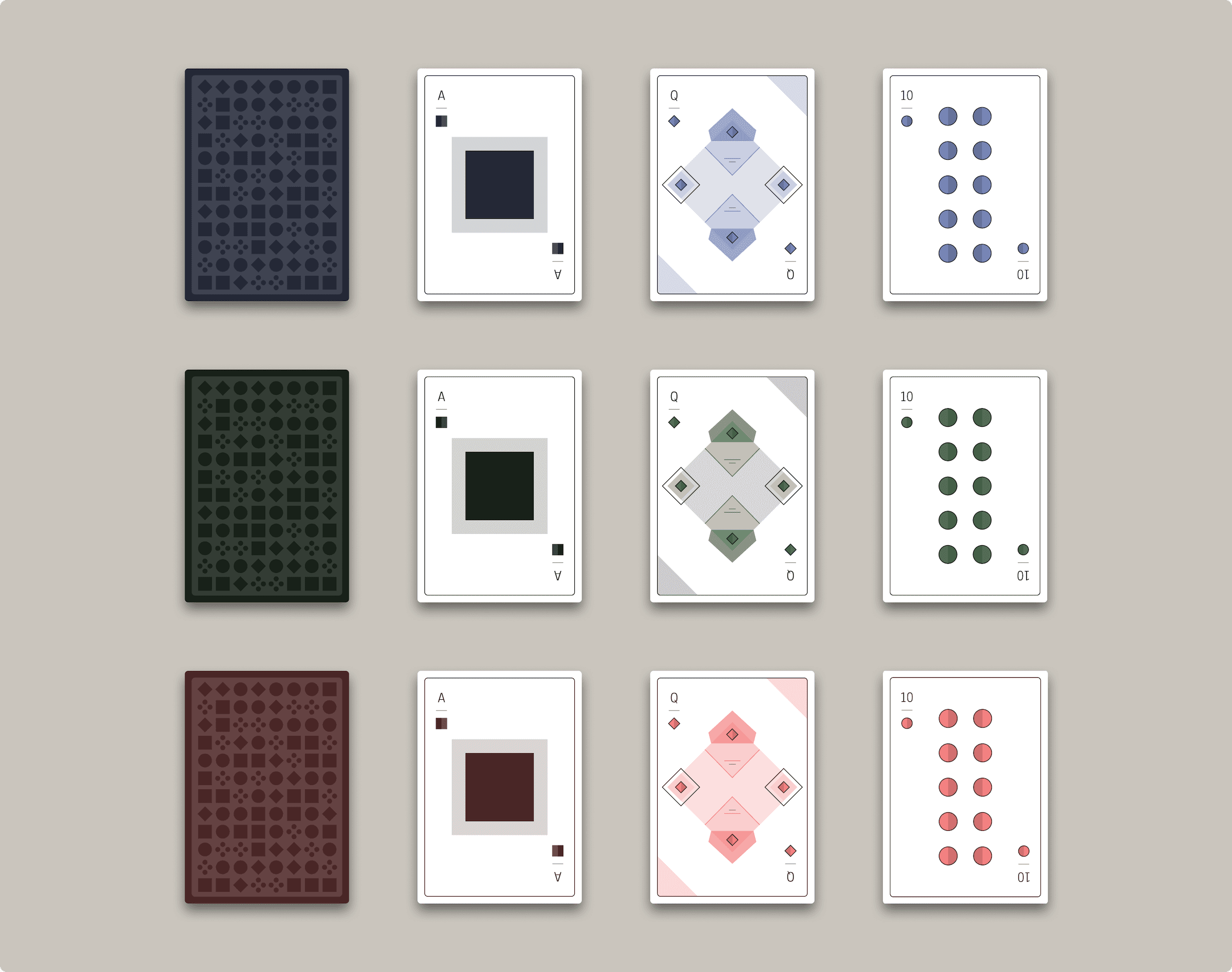
With easy color customization, I created 2 other decks with green and red hues
Lessons Learned and Impact
This project was more than just a creative exercise—it reinforced my skills in systems thinking, scalability, and user-centric design. Key takeaways include:
Design Systems: Understanding how small changes in core variables can scale across a system.
Attention to Detail: Balancing aesthetics with functionality to create a universally enjoyable product.
Collaboration: Leveraging feedback from informal user testing to refine and improve the final design.
These lessons directly tie into my professional work as a UX designer, where creating scalable, user-friendly solutions is at the heart of what I do.
Why This Matters
This case study showcases my ability to:
Take a holistic approach to design projects, from ideation to execution
Innovate with tools like Figma to push the boundaries of design customization
Balance creativity and functionality; an essential skill for solving complex problems in enterprise UX
fin.